
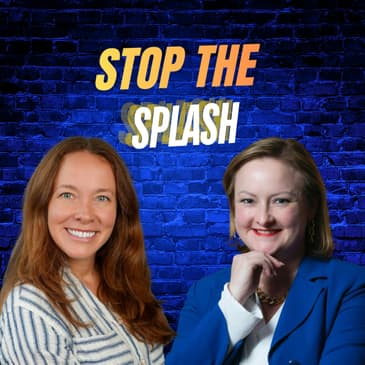
What happens when a nurse gets splashed in the face with biohazardous waste and decides to do something about it? She builds a company. In this episode Rosa Hart, RN, BSN, SCRN, sits down with Sarah Waimon, RN, BSN, CEO of Waimon Innovations Inc. and creator of Looey, a nurse-invented medical device designed to protect healthcare workers from hazardous splash-back during bedpan and ostomy care.
Sarah shares her journey from 16 years of bedside nursing across medsurg, oncology, ICU, colorectal, and nursing supervision to becoming a nurse entrepreneur and medical device innovator. She breaks down the moment that changed everything, a contaminated splash to the face on a colorectal postoperative unit, and how it sparked the creation of Looey, a transparent shield that attaches to standard bedpan washers to contain biohazards and protect caregivers.
This episode covers nurse entrepreneurship, nurse-led innovation, healthcare worker safety, infection control, and why nursing ideas are the future of medical device development.
Topics covered:
Nurse-invented medical devices and nurse entrepreneurship
Occupational health and healthcare worker safety
Infection control and biohazard exposure prevention
Ostomy care and colorectal nursing
Bedpan washer safety and splash-back prevention
Nursing leadership and clinical innovation
Mental health gaps in nursing education and patient care
From bedside nurse to CEO: the nurse founder journey
Connect with Sarah Waimon:
- Website: www.stopthesplash.com
- Instagram: @stop_the_splash
Pre-order Looey: sarah@stopthesplash.com
Connect with Nurse Rosa:
Follow Nurse Rosa's INsights in the Health Podcast Library
Get the Book: Speak Up, Start Now ( Nurses Week Gift of the Year)
On social media: @NurseRosaSpeaks
Nurse Rosa's INsights is your go-to podcast for nurses who are ready to lead, innovate, and speak up. Subscribe, share, and leave a review.
[00:00:01] I want to talk to my fellow nurses for a moment because this is important. I just finished reading Speak Up Start Now by Rosa Hart, RN, SCRN. And I'm telling you, for once someone said out loud what so many of us feel every day in healthcare, that we're waiting to feel ready, to feel confident enough to believe that our voices matter. This book shuts all of that down in the best possible way. Rosa doesn't just write from theory. She writes from lived experience at the bedside.
[00:00:31] in leadership and in rooms where real decisions are made. And she reminds us page after page that imposter syndrome doesn't get the final say. We do. Speak Up Start Now gives you the tools to step into your voice with the confidence healthcare desperately needs from us. I'm recommending this book to every nurse, every new grad, every leader, and every person who's ever felt like their ideas weren't enough. Because the truth is,
[00:01:01] healthcare can't wait. And neither can we. The change we want to see starts with our voice. Your voice. Do yourself a favor. Get this book. Read it. And then go speak up. And start now. Speak Up Start Now by Rosa Hart, RN, SCRN. Available now.
[00:01:31] Hello, and welcome to the Nurse Rosa's Insights Podcast. I'm your host, Rosa Hart. And joining me today is Sarah Wayman. Thank you so much for being here today. Thank you so much for having me. So, Sarah is one of the first nurse inventors to be on my podcast. So, I am so excited about this. And I cannot wait to hear your story. Your invention was incredibly relatable to me.
[00:01:58] And I really wish I had it back when I was working in the ICU and dealing with a lot of bodily fluids every day. So, Sarah, would you tell us about Louie and how that came to be? Absolutely. I'd be happy to. So, I've been a nurse for the past 16 years. And just a few years ago, I was working on a colorectal unit. And we had a majority of our patients had new colostomies.
[00:02:26] And so, quite frequently throughout the day, we were rinsing out the measuring containers. And one day, when I was rinsing one of them out, I got splashed in the face. And even though I've been a nurse for 16 years, like, this wasn't the first time this had happened. Oh, no. Yeah. It goes everywhere. Very relatable. But I finally was like, you know what? Like, I want to do something to protect nurses, make our jobs easier, make it safer.
[00:02:54] So, on my way home from work after that happened, I was driving home and I was like, all right, what can I come up with that will, you know, prevent this from happening in the future? So, I came up with the idea for a splash guard that would attach to the existing bedpan washing hardware. And I came home and I made myself, like, a little cardboard cutout as my first little prototype.
[00:03:16] And then I, like, painted it with, like, basically like a rubbery type paint so that it would be, like, waterproof. So, I could, like, try it on something and then make sure it was actually going to fit on the bedpan hardware. And then from there, I worked with a company that was local in Rhode Island and they helped to 3D print my first prototype. That's awesome.
[00:03:41] So, yeah. So, then after that, I was still like, all right, well, how do I bring this to market? Like, how do I get it to the next phase of design and development? And I actually kind of stumbled upon this company called NEMIC. It's N-E-M-I-C, New England Medical Innovation Center. And it's right here also in Rhode Island in Providence. Convenient. Yeah, absolutely.
[00:04:04] So, they basically, it's free to Rhode Island residents, but they have courses that they run through the year and accelerators. And they teach you basically like soup to nuts how to bring a medical device to market. So, I enrolled in their medtech leadership program and, you know, took that class and then was able to pitch in front of a crowd of, like, I think it was like 150 people or something like that.
[00:04:32] And now at this point, I've created this refined design and we're now going to be talking with manufacturers to have Louis manufactured. This is just utterly exciting. Did you ever think you would be engineering a medical device? No, I never thought I would be, like, first of all, I never thought I would be running my own business.
[00:04:59] And, like, I think a lot of nurses are very creative or people in healthcare in general are creative. And we think of ways to solve problems. And we're always saying, like, oh, well, what if this existed or what if that existed? Or if only, you know, there was a little piece of something that made my job easier or whatever.
[00:05:23] But I think it's important that nurses and caregivers and doctors take those ideas and bring them forth into the world so that we can, you know, protect patients and protect caregivers. Yeah.
[00:06:06] And we're all at work. But to take your idea from something abstract into reality where you can hold it into your hands has got to be, like, like a mind-blowing experience. Do you feel like, was that hard to find somebody to 3D print the idea and to get that all situated before you found that accelerator program? Or was that pretty easy because so many people have those now?
[00:06:33] Yeah, it was easy because so another resource in Rhode Island is a company called RyHub, again, another non-for-profit. And then Polaris is part of them or they referred me to Polaris. I forget the exact details there. But anyway, there's all these people who, like, want to help small businesses and, you know, help people out who are trying to build something in Rhode Island.
[00:06:55] So they actually referred me to a 3D printing company right in Quonset in North Kingstown, which is, you know, close to where I live. And, you know, I was able to just go one day after going to the beach and I came with my little, you know, cardboard cutout prototype. And I said, you know, can you make this, you know, into actual 3D printed model for me? And they, you know, whipped it out in like a week. Right.
[00:07:23] And was your goal to start a business out of this? Or so was it necessary to start a business in order to do this? Or is that like an extra step that you added on? Yeah, it was like it was an extra step that I've added on. Like I could have just been like, all right, well, I'm going to, you know, get the patent on this and I'll, you know, you know, license the rights and, you know, collect some money on the side.
[00:07:50] But the more that I went through the process, the more I'm like, the more passionate I am about it. And I'm like, I just want to be, I want to be a part of this. And I want to see it go into hospitals and know that it's helping people. And I want to have my hand in it. That is just utterly beautiful.
[00:08:10] So were there any like nurses or like other nurse mentors that were able to help along the process of like maybe testing and getting the word out? Yeah. So the so far I did a pilot study at South County Hospital in Wakefield, Rhode Island. And they've been incredibly supportive in letting me do the pilot study there. And then we've tested it out on each department.
[00:08:36] So we went from like the med search floor to the telemetry floor, orthopedics, and then the intensive care unit. And all the staff has been really excited about it. They've been really supportive as well. And it's just nice to get like the feedback from staff who are actually using it and to hear their stories too. They're like trauma stories about being splashed and stuff like that. Where they're trying to one-up each other with how gross it was that they got splashed with. Yeah. Although I feel like I have them beat. I'm like, I got colostomy.
[00:09:06] Contents in my face. Unless it's a colostomy unit and it's like that's what they're empty. Yeah. But it doesn't matter. Like I feel like I got pretty lucky. I only got something in my eye once. It was like sputum. Whenever I had any other kinds of bodily fluids splashed on me, it was like on skin that then got absorbed, but not on our mucosal membranes, right?
[00:09:34] Which I guess is even scarier. Yeah. And that's the other thing too. It's like if you sustain, if you get a splash injury, not only is it like it's, I don't know, you almost feel like you've been violated. You know? Like you're like, you're worried about, you know, contracting something that maybe the patient has. And then also you're then being pulled from your unit to go away from your patients. And maybe your coworkers have to absorb your assignment so that you can go get taken care of and checked in the emergency room.
[00:10:03] So I'm hoping that. I don't know. Is that a process that people do? Take people to the emergency room? I had to go to like get my blood drawn later. It's like wash it off now and then we'll do blood draws on you and we'll do blood draws on the patient. See what they have and what you might get, what you already have. So that if you get it later, we'll be like, oh, this was connected. And I think they even made an example of that on the pit, right? Did you see that episode? I didn't see that episode.
[00:10:32] No, I'm just starting to get into it. I was a little hesitant to watch it because I was afraid I was going to like get triggered by it. No, just the most validating feeling. Yeah. It is, is watching that show because, you know, I always really struggled with feeling like my friends that were non-medical and my family couldn't relate to what I was experiencing at work. And I couldn't describe it in a way that really resonated.
[00:10:59] But the way that the pit has been designed was so intentional to really let people emotionally enter into the experiences that we have working in a hospital. So, yeah, I really encourage you to see it. So especially so then you can refer back to it if you're talking to someone who is not in health care. And you can be like, you know what, if you watch this episode, then you'll totally get what I'm talking about.
[00:11:26] And I think for things like what you're doing, the Louis, for example, bringing home the importance of it and the impact that it has on the caregiver who gets splashed by things. It's not over in that moment when you clean it up. Like you may have months of lab draws to look forward to and hope that you didn't get HIV or something, you know. Exactly. Yeah.
[00:11:53] Let alone some bacterial infection that you can get. You have antibiotics, but still, you know. So are you originally from Rhode Island? I grew up in Massachusetts and I've been in Rhode Island for the past, I think it's like 15 years or so. All right. So most of the time you've been a nurse because I think you said you've been a nurse for 16 years. Is that right? Yeah. Yep. Right. Awesome.
[00:12:20] And then did you always want to be a nurse or was that a pivot for you that surprised you? Yeah. So the reason I became a nurse was my gramps was on hospice care. He had pancreatic cancer when I was about like 13 or 14 years old. And so he went on hospice at home and I saw just how compassionate the nurses were coming in to take care of him and everything.
[00:12:47] And I was always just like really inspired by, you know, just like how like angelic they were and, you know, how much they helped to like not only him, but like our family. And, you know, that's just something that I wanted to, you know, I wanted to do. That's awesome. Yeah.
[00:13:04] I actually pivoted to nursing from music because my grandfather had a heart attack and similar experience of just like that was my exposure to a part of health care that I hadn't been routinely. Like going to wellness checkups didn't inspire me enough, I guess. Yeah. No. But, you know, that is so important because like that's how we prevent things from escalating and getting out of control.
[00:13:33] So I'm actually a lot more excited about preventative care now after seeing, you know, what you've seen, all the suffering that we have encountered. So are there any other devices that have come up in your mind since you've done this? Are you just like laser focused on the Louis device? Yep. I've got the Louis and then I have one other device that I'm working on. So. Oh, more patents are coming, huh? That's hope.
[00:14:02] And then were you nervous to pitch your, to do your pitch in front of 150 people? Yeah, I was so nervous. I, um, I'm like kind of, I'm a little bit on the shyer side when it comes to like public speaking and everything. Um, just because I think it's because I don't have to do it. You know, you're in like our day to day jobs as nurses. We're talking maybe to like a couple of family members and to our patient. Um, but you're never in front of like a really big crowd like that.
[00:14:31] So, um, I was definitely anxious about it, but, um, you know, they, they, the people at NEMEC and everything really helped prepare me for it. So. Right. I'm really excited to hear about these accelerator programs that you found. And I know, so I live in Kentucky and we have several accelerator programs as well as like small business development councils and things like that.
[00:14:55] Now for your accelerator, what, was it a lot of business type coaching in addition to the medical device side of the business or like, was it all packaged in one? Yeah. So a lot of, um, business advice and like helping to set up my business, um, as well as, um, preparing everything for, uh, my patent.
[00:15:16] And so I was able to fortunately like get some funding for that because I don't know if you know, but like patents can cost quite a bit. Um, and so it was really, really helpful. For different kinds of patents? Yeah. So you have to pay first for, um, your, uh, provisional patent and then you have a year to file for like the actual patent. Why do you need a provisional patent? Sorry, this is actually completely new to me.
[00:15:46] Yeah. Yeah. So the, um, the provisional patent is basically like your little, like it holds your place in line kind of. So like, um, when I had filed for that, I actually did it myself because I was like, all right, I don't have money to be like giving money to lawyers and have them do it. Um, and fortunately like the, the trademark office and everything, patent and trademark office makes it, makes everything pretty user friendly for you to kind of figure out and do. I'm like, all right. So I do that all myself.
[00:16:15] And then, um, and then, yeah. So basically it like holds your place in line so that if, you know, if somebody were to come along and say like, oh no, I wanted to, you know, I have a, I'm putting, submitting my patent for this. I'm already like in the front of the line for it. That's awesome. And then now after you've already had your study to kind of see how it will work out, what's the next step for Louie?
[00:16:42] So the next step is, um, I'm working with, um, some industrial designers, um, from Niche is the, is the name of the company. And they have been, they've been so incredible. Um, but they've made a couple little design refinements so that, um, like one of the things that we learned in the study for it. For instance, was at first I thought that I wanted the Louie to be able, like, I wanted it to be easy removed so that, you know, if a nurse or somebody or housekeeping needed to like clean inside of it or whatever, like if anything got.
[00:17:12] You know, kind of caught underneath it, they'd be able to take it off, wash it really good. But with my study, I realized like, nope, we just need to like have a gasket in there and we don't want people like tampering with it. We want it to just basically be part of the toilet at this point. Um, cause I mean, we had people, patients take them off and like one was using it as a makeup tray. Oh dear. Oh my. So, yeah, I mean, that was also very like clever.
[00:17:42] Yes, very resourceful. Love that for them. But it'll make it a little more stable too, so. Exactly. Yeah. So. And so, yeah, so the industrial designers are making those little changes and then they'll 3D print, you know, that model. I'll test it out, um, just to make sure it fits everything right. And then from there, we'll be talking with manufacturers to, to have this, to have a tool made. So that's really like the exciting part. I just can't wait for that, that to happen.
[00:18:12] Um. Wow. Yeah. So then what do you picture your life being like after it's out? Like, are you just wanting to see what you can design and invent next? Or what do you think? Yeah. I figure I'll, I'll get this, this up and running. I'm hoping that I'll, you know, get it to some, um, conferences, nursing conferences. We went to the Magnet and Pathways Conference this past October. In October. Yeah. It was awesome in Atlanta.
[00:18:42] Um. That was incredible. It was such a great experience. Just like, I love, like, talking with other nurses and stuff, um, and hearing their stories. So, uh, I'm hoping, you know, once we get this going, I'll be able to do more of that. Um, and then, yeah, coming up with the next, the next device. Yeah. And I think a lot of the times disregarding the imposter syndrome that we have of expecting, oh, I guess we'll just have to wait for engineers to do that.
[00:19:09] I think there's also kind of this wondering of, surely somebody has invented that somewhere. We just don't have it. Right? So, was there a process you had to go through to check out the market and see if anybody else had already designed this and it just hadn't made it to where you worked? Yep. Yep. So, did a lot of research, um, you know, making sure that something like this didn't exist, but also that there weren't already existing patents on it. Um, which is also what we use the, the lawyers for, the patent lawyers.
[00:19:38] They do like a full-on patent search. Like you can do one, like a little preliminary one yourself, um, on the website. But, but yeah, they, they did the, they did the dirty work for me. Nice. Yeah. And so I, I think, you know, I've seen some people who, you know, they make something and then they find out there was a pre-existing patent and then it just gets stalled at that point. So, um, but I'm just so excited to see this because I've been talking to a lot of nurse
[00:20:07] entrepreneurs who are in business in various different ways. Um, but I don't think I've run into a nurse inventor of a device before. So I was, I thought this was very exciting and it reminded me of, um, one of my favorite interviews with, I think it was Jeremy Bronin and he invented the SedMed toilet seat. Did you see him at any of your conferences? Yes. I met him. Um, I met him at the, the Magnet and Pathways conference. Ah! I'm so jealous.
[00:20:37] I haven't met him in person yet. But isn't that just brilliant? You can just use two fingers and help somebody who's like 450 pounds get up off the toilet without hurting yourself. Yeah. Again, so simple. But like, I was at a different conference and they were showcasing this lift off a toilet device that used electricity and it was thousands of dollars. And then he's got this little device you just screw on like a normal toilet seat and it just works with leverage. And I'm like. Yes.
[00:21:07] The simple things can be. Exactly. That's brilliant. Yeah. And then I know there's times where I'm like, okay, like this isn't like, it doesn't use AI. It's like, this is literally just like a shield so that we don't get poop in our face. And I feel like I'm like, oh, this is so simple, but like. But also why is it this long to get this? Right. And so I think maybe as nurses, we can start using thoughts like that as a trigger for,
[00:21:36] oh, this is an opportunity where you're like, why isn't there something to fix that? Yeah. And instead of just being frustrated about it, say, oh, is this my chance to fix it, to make a solution or to develop an invention, for example? I think that also the word opportunity may have been hurt for us because I don't know about you, but it means something that you can do better next time on.
[00:22:06] Yeah, exactly. So it doesn't have the same exciting ring to it that it might have otherwise. But yeah, I think this is our chance to just put ourselves out there. You bet on yourself. You did it in your time outside of work hours. You paid your own money to develop it. So kudos to you. Sarah, you are a hero. Just like going through this process and showing us that it's possible. Thank you. Yeah.
[00:22:35] I hope that my story just inspires other caregivers and nursing nurses and CNAs to kind of think outside of the box. And there's a solution to every problem. I always say there's a solution to every problem. And if you can come up with a solution to a problem that will make patients safer and make caregivers safer, then like just go for it. Do it. You can do it. Right. And you definitely can't do it if you don't try. Right. Exactly.
[00:23:05] Exactly. So this brings us to the billion dollar question that I ask every guest on the Nurse Rosa's Insights podcast. And that is, if you were given a grant for $1 billion to meet a need that you see in health care, how would you like to see it used strategically to have the most sustainable impact? I would, as much as I'd say I'd like it to be used for, you know, building devices and
[00:23:34] things like that. I really think that that type of funding would help a lot of people with mental health issues and with homelessness. It's such a big problem throughout our country. Um, I think, I think that's definitely where I would allocate that, that type of funding. Are there any particular ways that you have seen interventions done for those populations
[00:24:01] that you would like to see duplicated in other areas? Um, I don't know. I just think it's like we, we need to be doing more for them. Like I see every day, like patients just, you know, psych patients holding in the ER for weeks at times, you know, sometimes, um, in just like a room without windows. And like, I feel like that's the most inhumane thing you could do to a person. Yeah, definitely.
[00:24:27] And do you think, um, directing some of it towards like training nurses on how to be more helpful to people in a mental health crisis would be helpful? Oh, definitely. Yeah. I don't think that we receive like enough, enough training, um, for that. This is why it matters to me so much. Yeah. And I don't know how I exactly, like I would implement the change to, to, um, to make things better for this, these populations.
[00:24:57] But, um, I don't know. We would find the people to do it. Um, yeah, I think that during, um, COVID, um, we had a lot of patients who were holding in our emergency room with mental health crisis. And there were times where we had like leadership, you know, down in the emergency room and we're all like, what, what do we even do? Like there was, there were patients running out of rooms and like screaming and yelling
[00:25:26] and singing and, um, just like pure chaos. Meanwhile, you have a, you know, uh, department that's also full of, you know, patients who are, you know, acutely ill with respiratory issues. And, um, so I would say that that was probably one of the moments where I'm like, okay, this is like, yeah, this is out of control. Right. Definitely.
[00:25:54] Well, I hope it's gotten better since the pandemic, but yeah, um, I'm definitely always looking for different ways we can improve the situations. Cause of course, mental health issues play into homelessness as you alluded to. And so a lot of people have trouble maintaining housing if they don't have the mental stability to go and, um, be at work. So yeah, that's definitely worth, uh, addressing.
[00:26:24] And I think, um, any lives that could be stabilized with a billion dollars to have better mental health and be housed, um, would definitely, um, it would change their whole world. That's beautiful. All right. Well, Sarah, if anyone has been listening to this and wants to reach out to you and talk to you about inventions or just Louie in particular, uh, is LinkedIn the best way for them to reach you? Yeah.
[00:26:54] And you can also visit my website. It's www.stopthesplash.com. That's awesome. Stopthesplash.com. Yeah. Very action-oriented. And you can follow me on social media, social media too. They're on Instagram. Same. Stopthesplash. Oh, oh, that's your handle at stopthesplash? Yeah. I love that. There's a little underscore in between each word. Gotcha. But still, it's adorable and I love it.
[00:27:24] And for our listeners, if you enjoyed this episode of the Nurse Rosa's Insights podcast, please like and subscribe wherever you are listening. Or if you're watching on YouTube, feel free to comment and reach out to me on social media at Nurse Rosa Speaks. If you have any, um, ideas for future episodes, I'd love to hear about it and I will see you in the next episode.