
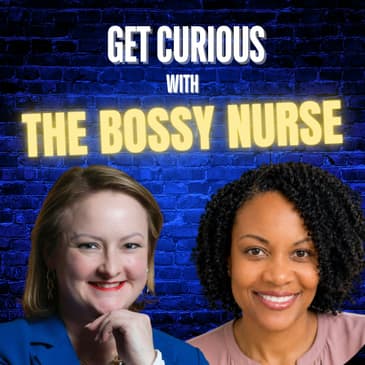
What can you do with a nursing license? According to Marsha Battee, just about anything.In this episode of Nurse Rosa's INsights, host Rosa Hart welcomes Marsha Battee, RN, host of The Bossy Nurse Podcast and a Nurse.org top content creator nominee. Through her platform, thebossynurse.com, Marsha empowers nurses to advance their careers, increase their income, and explore entrepreneurship.Marsha describes The Bossy Nurse Podcast as honest interviews with nurse creators, innovators, and risk-takers, including a standout episode with Dr. Dan Weberg on Nurse Capital and the basics of venture capital, a world most nurses never realize they can enter.Then she takes us through her remarkable 15-year nursing journey: from a burn trauma step-down unit to the ED, forensic nursing, nurse education, travel nursing during COVID, eating disorder treatment, prison nursing, and DOJ work, before making the leap into healthcare consulting. Her advice for nurses wondering what's next? Be curious, and try new roles.In her current Medicaid-focused consulting role, Marsha translates new laws and regulations into actionable workflows, conducts gap analyses, forms workgroups, and leads implementation to keep organizations compliant. It's proof that clinical experience translates into high-value expertise far beyond the bedside.And when Rosa asks how she'd spend a $1 billion healthcare grant, Marsha doesn't hesitate: she'd build a volunteer-based, free education infrastructure to expand the healthcare workforce and improve access to care for everyone.Timestamps:00:45 Bossy Nurse Website Mission02:13 Inside The Podcast03:41 Nurse Capital Explained06:44 Career Journey Highlights08:32 Forensic Nursing Deep Dive11:13 Be Curious And Try New Roles12:58 Remote Consulting Breakthrough16:50 Gap Analysis In Medicaid21:30 Billion Dollar Healthcare Idea25:21 Education Access And Capacity28:55 Wrap Up And Contact InfoConnect with Marsha Battee:Website: thebossynurse.comPodcast: The Bossy Nurse Podcast, available on all major platformsConnect with Nurse Rosa:Website, book, and speaking: link hub hereSpeak Up, Start Now is available now on Amazon Kindle and AudibleIf this conversation opened your eyes to what's possible in nursing, share it with a colleague and leave a rating and review to help more nurses find the show. Nurse Rosa's INsights is a nurse-led healthcare leadership and innovation podcast hosted by Rosa Hart, RN. We explore nursing leadership, healthcare policy, primary care challenges, AI in healthcare, clinical practice transformation, and bold solutions from clinicians, founders, and thought leaders. Subscribe for weekly episodes featuring evidence-based insights, expert interviews, and actionable strategies designed for nurses, healthcare professionals, system leaders, and advocates. Topics include: • Primary care system reform • AI in nursing & health tech • Clinical innovation & patient outcomes • Workforce sustainability & nursing leadership • Healthcare communication & advocacy Listen on YouTube, Spotify, Apple Podcasts & all major platforms.
[00:00:01] I want to talk to my fellow nurses for a moment because this is important. I just finished reading Speak Up Start Now by Rosa Hart, RN, SCRN and I'm telling you for once someone said out loud what so many of us feel every day in health care that we're waiting to feel ready to feel confident enough to believe that our voices matter. This book shuts all of that down in the best possible way. Rosa
[00:00:27] doesn't just write from theory. She writes from lived experience at the bedside, in leadership, and in rooms where real decisions are made. And she reminds us page after page that imposter syndrome doesn't get the final say. We do. Speak Up Start Now gives you the tools to step into your voice with the confidence health care desperately needs from us. I'm recommending this book to every nurse,
[00:00:53] every new grad, every leader, and every person who's ever felt like their ideas weren't enough. Because the truth is, health care can't wait and neither can we. The change we want to see starts with our voice, your voice. Do yourself a favor, get this book, read it, and then go speak up and start now. Speak Up Start Now by Rosa Hart, RN, SCRN, available now.
[00:01:22] Hello and welcome to the Nurse Rosa's INsights Podcast. I'm your host, Rosa Hart, and joining me today is another nurse podcaster, Marsha Battee. Welcome. Thank you so much, Rosa. It's so great to be here on your show. I can't wait to talk everything with you. So, Marsha is the host of the Bossy Nurse Podcast, and she was nominated for one of the top content
[00:01:48] creators on nurse.org this year, not just for your podcast, right, but also for your overall website, thebossynurse.com, right? I think it was just the podcast, the content creator for the podcast, yes. But yeah. Because you've created so much content on your website. Can you tell us what is thebossynurse.com so people will know what they could find there? Yeah. So thebossynurse.com is sort of
[00:02:16] like, it started off as my personal blog years ago when blogging was first coming into the healthcare space. So around 2014, I want to say. So I started blogging personally about nursing, self-care, lifestyle design, travel, just different topics that I wanted to talk about. And so it's sort of
[00:02:39] evolved over the years into different projects. And now recently I decided, you know, I want to start this back up because I was on a long hiatus from it, just getting busy with work and everything else. So I decided last summer that, hey, I want to start this back up again and I want to make it focused, more focused on community of nursing versus, you know, my personal stories and my personal blogs. So right now that's what you'll find. We at thebossynurse.com, we're empowering
[00:03:08] nurses to advance their careers, increase their income, and also increase their opportunities in terms of business and entrepreneurship. So that's sort of our focus. And we are batching content today. Yes, we are. You just interviewed me on the Bossy Nurse Podcast, and then we're flipping the script and going to do it on Learn About Marsha on the Nurse Rose's Insights Podcast. But tell us real quick
[00:03:36] what the Bossy Nurse Podcast is for and who you like to interview on there. Yeah. So as you know, Rosa, the Bossy Nurse Podcast is all about interviewing nurse creators, innovators, and risk takers. So any nurse who falls within that category and they feel they are doing amazing things. And even though you may feel you're not doing amazing things yourself, if people have told you that you're doing amazing things, we love to share your story on the podcast. So I've had some
[00:04:06] pretty amazing guests on the show in the first season. Right now we're recording the second season and we've had a couple of guests on there so far for the second season as well. But yeah, it's a great opportunity. I love the medium of podcasting. It's my third show because I started podcasting back when I started the blog a while ago, the RN podcast. So yeah, over 10 years ago, it feels like, yeah,
[00:04:33] it's over 10 years ago when I first started podcasting. But again, I've been off and on. But yeah, if you're interested in coming on the show, listening to the show, you're going to hear some amazing guests that I've had the opportunity to interview in the realm of entrepreneurship, podcasting themselves, also nonprofit work. It's an amazing opportunity to hear what's available outside of nursing. So yeah.
[00:05:02] Yeah, you were talking to Dan Weberg about venture capital, right? Yes. And that's something that we don't learn in nursing is, you know, in nursing school, at least when I was in nursing school. So I, you know, started nursing school in 2010. I did an accelerated program. So it was done by 2011. And, you know, never once did I hear anything about nurse in it. Well, I don't want to say nurse innovation, per se, but never heard about
[00:05:32] opportunities outside of the bedside, right? Because what we're taught is you're a nurse, nursing school, you go to your clinicals, and this is the work that you're going to be doing. There may be some programs now, and I've seen some type of survey type courses where nurses are exposed to other opportunities outside of the typical staff work that we do.
[00:05:57] But yeah, it's, we interviewed Dr. Dan Weberg on the podcast. That was one of the latest episodes I've done where we talk all about nurse capital. And nurse capital is actually the VC firm or the venture capital firm. And for those who aren't familiar with the term VC or venture capital,
[00:06:16] it's basically people who provide funding to businesses who are in, you know, anywhere from the idea stage into the growth stage, most likely those in VC in the growth stages of their business, meaning getting more customers, getting more clients. So VCs actually provide funding for a piece
[00:06:42] of your business. And that's a typical structure. So when you go to a VC and you work with the VC, who's giving you money, whether it's 25,000, whether it's a million, whether it's several tens of millions of dollars to help you build your business, they're going to take venture, they're going to take part of your business as equity. And yeah, that's not something that we learn
[00:07:07] about. So if you go to nurse capital, you'll find, I think it's nursecapital.net, but I can verify that with you. But if you go to nurse capital, you'll get an idea of what nurse capital or venture capital actually is. And they'll give you some qualifications on what it means to apply to a VC firm, which is typical what we know in Silicon Valley. VC is where we hear about that a lot. You know, being a part of
[00:07:34] getting venture funding, that's a big topic, of course, in startup world and the tech world, the biotech world. So yeah, I encourage everybody to not only listen to that episode of the podcast with Dr. Dan Weberg, but go and do some research on your own, especially if you are building products that may help healthcare or without being in healthcare as well. It doesn't have to be healthcare
[00:08:03] related. So yeah, it's a great topic. And then Marsha, tell us some more about what you've done. What's your clinical experience and how have you pivoted away from the bedside and still using your nursing expertise? Yeah, that's God, it's such a loaded question. I'm just told you everything. So you got to tell me everything now.
[00:08:30] Yeah, it's such a loaded question because I feel like I've done so much within nursing in the short time. I've been a nurse and I say short time as in 15 years this year, because I still feel like a baby nurse compared to the nurses who say they've been in nursing for 30 years or 40 years. But within this time period, I mean, I started off in nursing. So I did an accelerated program.
[00:08:55] I was working at UCLA right before I went into nursing. So I was working at UCLA as an event planner or meeting planner and then heard about the opportunity through a friend about an accelerated program at Georgetown. So I applied, got in, you know, moved cross country, packed up my car, sold everything I could and then packed my car with the rest and just drove from LA to LA to DC and,
[00:09:26] you know, started the program. Right out of nursing school, I went into a burn trauma step down unit and fascinating work learning about burn, you know, burn injuries. And after that moved into the ED, because we often work with patients on our burn trauma step down unit who first encountered the
[00:09:51] healthcare system through the ED, of course, then went into forensic nursing, which is probably the most, one of the most rewarding parts of my career as a nurse, despite the heavy topic that is. I work with patients following sexual assault, domestic violence, intentional traumas like gunshot wounds,
[00:10:15] stabbings. Because we were part of a trauma, we had a trauma pilot going on with our forensic nursing work. So that was really fascinating work. And I felt, I felt in that role that I really realized what nursing was because in that role, I had the time to actually sit and talk to a patient. Um, and prior to that time, I don't feel like I ever had that. And because with forensic nursing,
[00:10:45] you are often spending my very first patient off of orientation in that role, it was a nine hour case, meaning I work one-on-one with the patient and it took nine hours. Um, and, and there were some complications around why that particular case took so long, but, um, typical cases, uh, with sexual assault, uh, sexual assault patients or patients who've experienced sexual assault. Um, they can take
[00:11:13] anywhere between three to five to six hours. And, uh, those with intimate partner violence or domestic violence can sometimes be two to three, you know, hours long doing exam. But during that time, you're actually working one-on-one with the patient. You don't have any other patients whatsoever. If someone else comes in who has, um, experience, you know, this tragic circumstance as well,
[00:11:38] they actually wait until you're finished with that one patient. So worked in forensic nursing, from forensic nursing, did nurse education, uh, was a clinical educator in New Mexico. Um, then, um, then, did some travel nursing, of course, during COVID, worked in eating disorders on an eating disorders unit, um, and, uh, worked at the DOJ, uh, as a nurse coordinator. Um, I would, I ran a single
[00:12:06] nurse clinic, um, right before COVID and then COVID shut down and, you know, I had to figure it out and did COVID testing and went into management with COVID testing, uh, you know, giving COVID vaccines. And now I'm here in, uh, the healthcare arena space, a healthcare, uh, healthcare consulting. So it's, it's, it's, that's why I say it's a complicated, it's a complicated like journey. There's so much
[00:12:35] I've done because what I tell other people, um, when they ask me advice on just nursing in general, or those who are wanting to be a nurse, I always say, be curious. And that's, that's sort of my mantra. Now it used to be start before you're ready, but now it's be curious. And I've always been the type of person that's been curious. Um, and I was just having a conversation with someone last night over dinner and I said, you know, I got a flyer in the mail one day while I was living in New Mexico and
[00:13:03] it was like, become a prison nurse. Are you that curious? I was curious. And so I went to this, uh, they had in the, in one of these hotels in Albuquerque, they had just a, like a health fair or something or, uh, some type of, um, hiring fair. And I got that flyer in the mail and I said, I'm just going to go and figure, you know, find out what this is all about becoming a prison nurse.
[00:13:30] And it turns out, you know, I met with the nurse manager of the penitentiary of New Mexico and I was almost basically hired on the spot. And so I decided to do prison nursing, you know, I worked in maximum security and minimum security, uh, you know, uh, floors or units or buildings within that, um, system. And I, you know, was curious about, you know, healthcare in the,
[00:13:57] you know, justice system. So be curious if something piques your curiosity, read about it, reach out to people. Don't be afraid to try something new. Um, you don't have to quit what you're doing to try something new. So, um, yeah, it's just been around about, I'm sure there are 20 different other things I've done with nursing so far, but you can do a lot. Yeah. And as a healthcare consultant, now, um, you were telling me how you look at policies that are
[00:14:27] coming through, uh, that affect healthcare and doing a gap analysis. Can you describe that anymore? Yeah, right now, um, I got the wonderful opportunity, um, to work as, I had the wonderful opportunity, wonderful opportunity to work as a healthcare consultant. And this was simply by chance. Um, it wasn't something I planned for. Um, I was actually, um, finishing up a nurse clinical
[00:14:56] manager assignment in California. I was working at a large clinic in California, managing about 40 plus employees. I was on an assignment, a travel assignment. So I did three months and then they renewed me again for another three months until they hired someone. And so it was interim leadership position. Yeah. And it was on, you know, back and forth with that position. I could come back and forth home every two weeks if I wanted to, and my agency paid for it. And, um, yeah, I was in an
[00:15:22] airport and I got this strange call from someone on a layover. I'm walking to my gate and I remember just stopping near this big window in the airport so I can hear because just so I wouldn't get cut off. And, um, yeah, it was a recruiter and she said, Hey, I found your resume on, um, you know, uh, indeed, um, it had some keywords, relative keywords in it. And, um, I think I have an
[00:15:49] opportunity that you'd be really great for. And I just thought it was a scam because she wanted, she mentioned working from home. I'm like, yeah, right. She mentioned working from home and, um, you know, um, and at the time he said, you know, well, you know, the income that I'm making right now, it's going to be hard to make that transition to work from home to take a big pay cut because what I
[00:16:15] noticed, or at the time when I was looking into remote work, because my assignment was finishing up and I was trying to find something that would have me give me the ability to work from home. I just remember looking at jobs that were a lot lower than the pay that I could afford at that time, because I, you know, my, my circumstances were, you know, living at the salary that I was on. So
[00:16:42] making that transition to remote work, I thought was, you know, making, you know, working into, you know, things like utilization management or case management. And I knew I didn't want to do that type of work. Um, but she was talking about how I'd be working within the space of, uh, helping with policy and regulation. I'm like, this is fascinating. And she had a very small description of the job. Um, and she didn't know much about it at all, but, um, you know, I told her what my salary
[00:17:10] requirements were and she said, um, oh yeah, we can do that. Cause I said a little bit more cause I was like, this is not going to happen. And so sure enough, when, um, it took three months to get hired on because there was an interview process when you're hired for these types of roles, they need to know if you can communicate effectively once, first of all, um, they need to know if you are professional to, you know, professional enough to interact with certain populations within the
[00:17:38] organization that you're going to be working with. Because every day I work with VPs and executives within this healthcare organization. Um, and so, you know, I did the three interviews for that role and got hired on and that's when I learned about the job. And so I didn't, I had never worked in the consulting space or behind the scenes within healthcare, I think in that sort of sort of
[00:18:03] capacity, because this work involves, um, specifically working with, within the Medicaid space. So basically my portfolio of work and tells me, you know, getting, uh, laws, regulations from state agencies, federal agencies, and basically translating that particular
[00:18:28] guidance to something that we can work with in terms of the care that we're providing. So say, for instance, I get, um, a new law comes through according to how we should treat patients, um, for instance, following stroke. I mean, of course this is completely made up. Say just in your, you know, your realm and your space. If we get some new guidance about a medication that came
[00:18:54] through that, this is how we should handle this in terms of paying for it in terms of Medicaid. Um, so I get that regulation down if it's in my portfolio, if stroke is in my portfolio, I get that regulation. I read through those regulations and those laws, get help from our policy team. And basically we're translating that language into something actionable that we can look at
[00:19:18] and implement within our system. So I would get the gap analysis, meaning I am taking the information that was provided by the state or federal, uh, you know, policies or regulations, what have you. I would take that information, see what we're already doing within that guidance. And then what we're not
[00:19:42] doing within that guidance and what my job is to, is to fill that gap, to make sure that we're compliant and where we're adhering to regulatory guidance or regulatory language. So basically I fill that gap by forming work groups. Um, I might form a committee of members who are within care coordination,
[00:20:04] who are within, um, member services, who are in, um, you know, uh, quality. So I would pick up that language, say, Hey, we're missing these things. We're already doing this part of what the regulation says, but now we need to do this part as well, because this is new. We need to implement this. So I bring in team members, form work groups, make sure they're aware of the new guidance, um,
[00:20:28] and then implement it in way and make sure that, you know, our providers, uh, within our medical groups, our providers are implementing those policies, uh, the way that they're supposed to be doing it. And we have the oversight and monitoring processes in place that we can actually, um, make sure we're in adherence and make sure we're compliant with the law. So my role is basically an implementation leader or an implementation consultant. I make sure that any guidance that we're getting, any new
[00:20:58] guidance or any changes to any guidance that we've previously had, that we're just making sure, um, we are following that guidance and making sure we find a way to implement that guidance within the care that we're giving to our patients. So, and yeah, that's, that's the work that I do now. It's really fascinating work, especially for nurses who have never worked within or outside of direct
[00:21:24] patient care. Um, and that was my biggest transition was sort of realizing what this body of work was and how different it was from actual patient care. Um, because patient care were paid to, you know, do tasks and, you know, critical thinking, of course, but we're paid to do the task and make sure we use our critical thinking when we're doing those tasks. Whereas in the work that I'm doing as a consultant,
[00:21:48] we're paid to strategize, implement, um, create workflows, create work groups. Um, so it's a different, it's a different type of work, but it's very fascinating, very interesting. I love it. That is so cool. And I don't think we hear much about that. And even in the remote job postings, you'll see like the nurse fern job posting. Yeah. Here's these remote work opportunities. Yeah.
[00:22:15] Like you said, um, a lot of them don't pay out comparably. Some of them do. Um, but it is a lot of the same types of work. And so what you're describing is so different. It does sound intriguing. Yeah. And you have gone hard and fast to learn many different facets of nursing in your career, just in, I guess, blink of an eye, 15 years. So I am really curious to see how you're going to answer
[00:22:45] my signature question. Are you ready, Marsha? Yes, I am ready. So on the nurse roses insights, I ask every guest, if you were given a grant for $1 billion to meet a need you see in healthcare, how would you like to see it used strategically to have the most sustainable impact? Yeah. And I've been thinking about this question because I know you asked this
[00:23:10] of everybody and I was just sort of thinking in the way that I am working currently. And part of my work is, um, working to implement, you know, monitoring and controls within network adequacy, making sure patients have the right care at the right time. Um, and you know, the right type of care at the right time. And so when I think about this question, I think about, you know, something
[00:23:36] that's probably in a way that's more, um, sorry, uh, I think about it. Sorry. Can you hear that at all? Yeah, it's okay. Okay. Okay. So sorry, my Alexa is going off right now. I have it set for reminders. Um, and it's reminding me of something right now. So sorry about that. Um, so yeah, so what I
[00:24:01] have this like fascinating, um, idea of just what, how fascinating would it be if we were able to provide volunteer, I know this may sound outlandish to some, if we were able to provide volunteer
[00:24:26] educational opportunities for everyone who wants to be in healthcare, everyone who wants to have the opportunity to become a provider, become a nurse, become a speed, speech pathologist, become, you know, social work and within healthcare, everyone would have the opportunity to go to schools for free
[00:24:50] and get this education, um, through a volunteer network. So meaning that providers, nurses volunteer their time and making sure we teach the correct, um, curricula to those who want to be involved in healthcare, um, and putting that money towards building that structure, the infrastructure of building a
[00:25:14] volunteer network of schools, uh, nursing schools, medical schools, um, allied health professionals, those type of schools as well. If we can just put that money towards all of those different avenues where people who want to become healthcare workers can actually go to school, um, for free. And I know there are scholarships and opportunities already for people, but what if we can expand that network to a
[00:25:38] free volunteer network? Um, I think that would increase our capacity to provide care for a lot of patients because a lot of patients cannot get care because a lack of access in terms of appointments and a lack of providers in terms of their availability in certain areas of the country. So if we can expand access by
[00:26:01] expanding our provider network, um, and again, providers could be from nurses to medical doctors to, um, social workers or anybody involved in the health space, if we can provide an opportunity for anybody who wants to work in this space can do it for free. I think that would be a way that we can expand access and utilize those, that those dollars to build the infrastructure to do that. So I know it probably sounds like an outlandish gold, gold, but I think
[00:26:30] about it a lot sometimes, like what if we had a network of volunteers who actually taught curricula to do this and build out, build out that infrastructure. So that's, that's my answer. Well, I mean, you got to put some kind of solution out there when something is a professional degree that should get student loans. So what is the alternative? And, and that's all of the talk about that, that's been online. And that's where the idea actually came from.
[00:27:00] Um, when I, when that first, um, guidance came down from, um, is it the department of education? I, I guess who put out that guidance, um, when that guidance first came down, um, I thought, well, you know, because some schools are very expensive. I mean, I went to an expensive nursing school. I mean, it, it cost, it cost a pretty penny. I did get a scholarship, which was 80% paid, which was great.
[00:27:24] But for those who want to go to, you know, certain schools, it shouldn't be a hindrance that the money is the actual problem. And, you know, not everybody can get a scholarship, no matter how smart or how much of merit they have. Not everybody can afford to, to do programs. Um, and I know the, the arguments against that are, um, well, there are public universities and institutions.
[00:27:47] So I have to say to that, um, I remember when my friend told me about nursing school being a possibility, Hey, have you thought about nursing? And before I applied and got accepted into this accelerated program, I started looking in California first. In California, there are wait lists to get into nursing school. Like two years long. Yeah. Two years long of a wait list. So what if we could
[00:28:14] expand that capacity and actually build an infrastructure where it's education is based off of a volunteer network? So yeah, that's my grand, if I grand theme of, if I had all the money in the world and I can do anything, I would do something like that. Build a, build a, you know, infrastructure for volunteer networks of schools and education surrounding healthcare.
[00:28:38] Well, I mean, they're already reliant on unpaid clinical instructors and people to do preceptorships with nurse practitioners or, um, I don't know what the model is with physicians, but a lot of the hindrances to the capacity that they have are the lack of, um, openings for their fellowships or for
[00:29:07] their clinicals. And in addition to not having enough nursing instructors. And I think those people should get paid. Yeah. So that they will be able to tolerate doing it. Uh, cause you're right. A lot of people can't get in to provide healthcare, but people are leaving healthcare or committing suicide to exit healthcare faster than they are getting into healthcare. So, um, on your, to your point,
[00:29:35] yeah, sure. We need to accelerate the intake, but not if it's just going to cost people to quit or lose their life over it. Yeah. So I think we do have to plug the leak as well. Um, just concurrently at the same time. Yeah. At the same time. At the same time. Yeah. Both. And I'm sure there are other dependencies as well. There are probably a hundred other dependencies on, on that as well. So yeah. Right. But yeah, you're right. I mean, communication is one of the hardest things. So coordinating
[00:30:04] a volunteer network or even, um, a paid network. There's a lot of communication that has to be done in it. And it would probably take a billion dollars because communication is hard. It would. I'm sure. Yeah. Well, Marsha, thank you so much for joining me on this podcast and having me on the bossy nurse. So if any of you are listening and are not already following the bossy nurse podcast, do check that out as well. And I will have your links in the show notes. If anyone
[00:30:32] is interested in reaching out to you, is LinkedIn the best way or should they go to the bossy nurse.com? You know, I'm old school, you know, email me at team at the bossy nurse.com. Okay. I check email more than anything else. So team at the bossy nurse.com is the best place to find me. I'm, I'm on LinkedIn, but I lurk. Like I said, I don't really engage as much as I, as I could
[00:30:55] or should, but yeah. I found you anyway then. Yeah. And then if you've enjoyed this episode of the nurse roses insights podcast, make sure you like, and subscribe wherever you're listening, or if you're watching on YouTube and I'll see you in the next episode.