
What happens when burnout breaks you open, and you decide to build something from the wreckage?
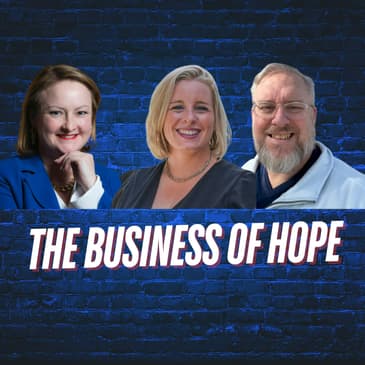
In this episode, Rosa sits down with Ashley Chancellor and Matthew Harless, co-founders of The Business of Hope, to explore why burnout in healthcare goes far deeper than exhaustion, and what hope, as a functional tool, can actually do for clinicians on the front lines.
Ashley Chancellor, RN spent 14 years as a nurse, much of it traveling the country as an ICU nurse. A fractured spine and severe PTSD during COVID took her off the floor indefinitely. What came next was a memoir, a coaching practice, and a mission: reminding the helpers of the world that they are worthy of the same compassion they give.
Matthew Harless, RN brings over twenty years of clinical experience across psychiatric care, emergency medicine, rehabilitation, and hospital leadership. He's the creator of the Harless Method and the Hope Assessment, tools designed to help burned-out clinicians measure where their hope actually stands and start moving toward recovery instead of self-blame.
Together, they're making the case that hope isn't a soft skill or a poster slogan. It's infrastructure. And it can be measured, built, and protected.
In this conversation, Rosa, Ashley, and Matt dig into the real difference between burnout and moral injury, walk through the Hope Assessment live on air, talk about what it looks like to use hope-informed care in real clinical settings, and ask the hard question: what would it actually take to fix this?
Resources mentioned in this episode:
hopeassessment.org ashleymchancellor.com mattharless.com nursesshiftchange.org Just a Nurse by Ashley Chancellor Medicine Under the Mango Tree by Ashley Chancellor (upcoming) Transition to Care by Matthew Harless Ashley on TikTok and Instagram: @justanurse_rn Rosa on all socials: @nurserosaspeaks
[00:00:01] I want to talk to my fellow nurses for a moment because this is important. I just finished reading Speak Up Start Now by Rosa Hart, RN, SCRN and I'm telling you for once someone said out loud what so many of us feel every day in health care that we're waiting to feel ready to feel confident enough to believe that our voices matter. This book shuts all of that down in the best possible way. Rosa doesn't
[00:00:27] just write from theory. She writes from lived experience at the bedside, in leadership and in rooms where real decisions are made. And she reminds us page after page that imposter syndrome doesn't get the final say. We do. Speak Up Start Now gives you the tools to step into your voice with the confidence health care desperately needs from us. I'm recommending this book to every nurse, every new grad, every leader,
[00:00:55] and every person who's ever felt like their ideas weren't enough. Because the truth is, health care can't wait and neither can we. The change we want to see starts with our voice, your voice. Do yourself a favor, get this book, read it, and then go speak up and start now. Speak Up Start Now by Rosa Hart, RN, SCRN, available now.
[00:01:32] Hello and welcome to the Nurse Rosa's INsights. I'm your host, Rosa Hart, and joining me today is Ashley Chancellor and Matthew Harless. Thank you so much for being on the podcast today. Thank you so much for having us. We just look forward to sharing what we've been doing. Yeah, and I'm so curious because I've been following you for a while and I've seen kind of the evolution of things as they kind of developed organically like on LinkedIn as much as I could see. So I'm really
[00:02:01] curious to explore that and I have some questions to kind of pull out the story from both of your perspectives. So now both of you came to be doing this work together, the business of Hope, which your partner's on, right? We are. Yes. And that's informed by very personal experiences that you have both had in healthcare. So what happened in each of your own journeys that made you realize something deeper
[00:02:30] than burnout was happening to clinicians? For me, my background kind of led naturally into this burnout phase. Unfortunately, I was an ICU nurse for over a decade and I was a travel nurse. And during COVID, I was working Frontline's ICU. And during that time, my spirit broke. And a week before I was finally just going to take at least a month off to kind of like regroup and regather, I fractured my spine.
[00:02:56] And yeah, and I was not able to return to bedside. And in that pain, I spent months just laying on my floor and crying. And that is where my book came from, Just a Nurse, that I wrote kind of from that very, very painful place of wanting to be a nurse, desiring to be a nurse, being a great nurse, and then getting to a place where you're so broken and you don't even know how to start to heal. And that was my initial burnout story. And as I started to heal along that journey, I met Matt.
[00:03:25] And Matt, I'll let you tell your story. Yeah, I'd say the tipping point was last year, April 22nd. I was assaulted by a patient. I've been assaulted by several patients, but this one was different because she was like an 80-pound patient. You know, if you can't tell, I'm like a 260, 70-pound power lifter.
[00:03:47] I'm strong. But this patient attacked me while I was holding her up, basically, and damaged my back to the point where I can't lift more than 20 pounds off the ground without having severe migraines. You know, physically during that time, Ashley and I had been working together to try and put a nonprofit together to help people recover from burnout. And the more we kind of researched this,
[00:04:13] we started discovering more about like the nature of the injury. And we started looking at the moral injury that people were going on. And then we got onto the idea of secondary trauma. And honestly, I don't even think it's secondary anymore. I think the burdens that we're being asked to carry are beyond the human limitations of individuals. And the more we interview people with this frame set,
[00:04:40] the more that we're finding that it's not just, I need to work harder. I need to work smarter. It's no, you're being asked to do things that no human being, you know, has the capability of doing. And you have every right to step away. And you have every, like, you know, we encourage, you know, you have to be healthy to pour, you know, yourself from a full cup. And I think many times
[00:05:08] we're being asked to pull from an empty cup. And Ashley was a huge part of me coming back from my recovery emotionally, just from that assault. And as much as just the hurt and as much as the pain has occurred, we're not here to out trauma each other. What we really came out with was the solution
[00:05:31] to all this has to do with hope. And that's what we've done is we've redefined hope to what it functionally is. And I think so many people accept it as this soft skill or this emotion. And what we've, we've dissected hope to its like scientific elemental levels. And I think what we have is revolutionary. And how did you find each other in that?
[00:05:57] Networking. Nurses, networking with nurses. And I will tell you, it is social media. Other people, other nurses reaching out, interviewing me about my book. Honestly, I think this will all come full circle. But because I took time to heal and I found my medicine, which was happened to be writing, I didn't know that. But because I worked on that medicine and I crafted that art, I had something to put into the world. I had something for other nurses to be interested in that wanted to interview me.
[00:06:22] And as I met different people that were working on organizations and we were able to help each other, Matt and I's paths just kind of sort of crossed. And we started working on a book together and building community and reaching out to people. And as we were working on the book, it naturally developed that we had to find a way for people to self-assess. And it just kind of, again, it has been so natural, our path to finding each other. It's
[00:06:48] almost just like our own self-care. When Matt and I first started working together, I am still coaching, but my specialty was coaching burned out nurses. And so I was able to aid and assist in a very compassionate, peer-to-peer way and help him in that regard. And he allowed me into that space with him, which is something that so many nurses are afraid to do. And so because of that vulnerability and because of that, being stuck in the muck together, you know, we were able to kind of create and craft something really, really beautiful here. That's awesome. And Matt,
[00:07:17] do you feel like your background working in psych was really helpful in developing this framework and even the treatment plan essentially that you've developed? Yeah. My years in the psychiatric hospital, I feel like there was an emotional labor that I had to endure that I don't think the average nurses are expected to live with. I think it's, I said this
[00:07:46] before, but I think it's, you know, one thing when you're working with a suicidal patient, there's an expectation that maybe their, their, their life is not going to end well. The same with addiction. When someone dies or commits suicide and they've spent 20 years working on that issue and you know, it's a critical part of who they are. It doesn't hurt as much, but when a number of your peers that are
[00:08:11] professionally working on the issue of suicide commit suicide themselves, you begin to have a different outlook and it, it's a different burden when you realize your peers are suffering so much. To carry that over, not only was that in the psych hospital a decade ago, I find the same thing true in the nurses that are having to deal with this current structure of healthcare in general.
[00:08:41] Exactly. And I'd love to explore more with you about moral injury instead of burnout because, you know, burnout happens in every industry, but moral injury I feel like is something that, especially healthcare, we have to encounter that we were not mentally prepared for and the infrastructure is not designed to. So can you explain to us what the difference is between moral
[00:09:06] injury and burnout? What I'll tell you is the infrastructure at a majority of hospitals does not have the avenues to help people. There is a small pocket hospital networks that are actually in focused on the care of their staff members. What we've realized is it's, it's such a small percentage of
[00:09:29] healthcare organizations that are truly trying to support their employees that, that it's, it's, it's, it's difficult to celebrate because it's so hard to find. A lot of structures aren't looking at actually solving the mental health issues inside their organization. I've said it many times, but they,
[00:09:53] they hijack the words mission, they hijack the words care, and they hijack these words for the intentional public efforts of margin so that they can extract the maximum profits from these individuals. Basically on the backs of our care, they're, they're going to extend our efforts as far as possible so
[00:10:16] they can make an extra few dollars off of us. And they use resilience as a weapon. They use a lot of buzzwords alternatively so that it, it, it, it manufactures more for their bottom line. You know, without naming names, I mean, there's, there's large institutions that make more money in a single day than several hospitals make in a year. And those institutions are extracting as much money as they
[00:10:45] possibly can out of the system that's invented to help your mom or your grandma recover from cancer. And those are the people that are, that are causing this harm as much as like managers and directors and CEOs and chief nurses officers. Everybody wants to like point the finger. It is so much farther above all of these people's titles and positions. And it's like, these people benefit from all of us
[00:11:15] fighting with each other. And it's like for a bedside nurse to maybe understand all of the intricacies of it is impossible. But like, seriously, like these are not the people I'm concerned with. And I think we're all kind of suffering together. I think the, the important thing that you asked here, Rosa, is the burnout versus moral injury. And what Matt's addressing is, is the constant structure that is built to keep us burned out,
[00:11:40] to keep us task oriented and those kinds of things. And I think the moral injury comes in. When we as healthcare workers got into this industry, even if it's 10% of why you took the job, to some degree, you thought you were going to help. You thought you were going to make a difference. And I don't know about anybody else, respiratory, lab techs, doctors, but I know as a nurse,
[00:12:04] I took an oath to help without doing harm. And I got to a place in my career where I could hardly show up to a shift without realizing how much harm I was needing to inflict on people and how much harm the system was inflicting. And that kind of repeated betrayal of our own personal values that continued
[00:12:28] showing up for more than 40, 50, 60 hours a week to something that doesn't feel like it's helping or changing. And on top of that is crushing us, is like destroying our souls. It's making us not want to help people we leave so depleted that I, I don't have the energy to help someone up off the street.
[00:12:51] What it, we're crushing humans from the inside out of healthcare and the moral injury is at an all time high, which means that our hope is at an all time low. Yeah. And so I started learning about moral injury working on the ethics committee in the hospital when I was still in the ICU as a nurse. And I tried to
[00:13:16] continue that work working on ethics with, you know, the American Nurses Association and my state association because I really feel like that taps into the moral injury like element of it in that we are pursuing doing what is best for people and we go to conferences or we read up on things and we get education on how to give the most optimized care. And then we don't have the resources or the staffing to make it happen.
[00:13:45] And so when you know that a better outcome is possible, but you don't, you're not equipped to do it and people are coming to you asking for help. And so I really appreciate the work that you are doing in realigning this. And so now I know Matthew, you said that hope is not just a feeling, it's related to that infrastructure. So what does it
[00:14:10] actually mean to build hope the way we build safety or quality systems in healthcare? I think the best way for us to do that is to show you an example of one of our check-ins. Would you like to be a part of that? I get it. As long as I don't have to do any tricks. There's no tricks. It has the sticker. The way we talk about it is living with the assessment. It's a very simple, like zero to 10, like a pain score kind of works in reverse. So we have the
[00:14:38] images there because some people respond better to the images. The one to two is just how you feel crisis and overwhelm. And we put the hand first, we had a stop sign, but it's like, you're not stopping your, the hand is more like pause. You know, we talk about that 30 second pause in your day, but it's just that mindfulness. But, you know, some, a lot of people we encounter the first time is, is this crisis overwhelmed and they really just don't know and they don't understand.
[00:15:06] We, we, we talk about that level and we say, that's where people need to find the professionals, you know, who is, is really like working in those areas. And, and on our website, you know, we have all these resources for people to go, like who to call 911. Whenever I hand the sticker out, I think if you're a nine, if you need help, like I always tell people, I would go with you, like we'll get on the phone together and find crisis support. The yellow three to four is more like seeking support. And you have that heart with the other people that's peer support.
[00:15:37] The green is the five or six. It's, it's all about the tools and, and utilizing tools. And, you know, some of the most important tools is boundaries. The most, first, most important boundary is no. And I think, you know, that's important to say anytime you feel overwhelmed, but building those skills of agency of how, you know, you are a licensed, independent, critical thinker, and you need to be able to act confidently and competently. And then the,
[00:16:05] the blue is really where we celebrate, you know, stability and growing. We have the little plant. My wife loves plants. I just love seeing that. It makes me smile. But seven and eight is really our gold standard where we expect people to go. You're stable, you're growing, and you're celebrating the fact that, you know, you're, you're competently moving through healthcare. And then nine and 10 is, is the rock stars who are just doing so well that, that they in turn want to come back and give.
[00:16:30] So when we start our meetings, we always are like, where are you at today? And I got to be honest, I've had a terrible week and a lot of my trauma has kind of come back in my life and in shocking ways. And I have difficult even sharing it, but like, I've probably been in that one to two care area. And I've, I've seen my doctor Wednesday. I have a therapist going to go work with. And, you know, alternatively, you know, I'm using my skills and I'm, I'm talking to my wife and Ashley's always been
[00:17:00] supportive too, but it's like, you know, I'm struggling for the days that I'm, I'm blue and I'm doing well. There's just like as many that I'm all the other colors. And like, just because I'm feeling like this crisis and overwhelm, it doesn't mean I've given up, but I know the work I need to be doing on myself. And that's where I'm at today. Ashley. Rosa, we designed this tool initially to be used kind of in the start of huddles, you know,
[00:17:28] that little three minutes that you have at the start of the day. If we could all just go around and recognize where we are just a quick number. And the idea is to first acknowledge where you're showing up, but also just be aware of where other people are showing up. And we say this because sometimes we do show up to work, even when we're a three, four, because where else are you going to go? You know, but you're also not prepared to take the 17 year old on life support who they're withdrawing today. That's not an appropriate assignment. And also I can't help everyone on the unit,
[00:17:58] but I can be here. And so without going into dynamics or what's really going on in your life, if we just took a minute and went around the room and real quick between the five or seven nurses that are on your unit, where are you coming in at? It would give a very quick analysis and a quick, like, here's our team. And I bet some days a lot of people are low and some days a lot of people are high. And when someone's really high, they have the energy and effort to go around and help somebody
[00:18:24] else. And you know that if you're a five and you're working on boundaries, hey, I just kind of need me today. You know, don't be mad if I can't run to help you. And so that's where this idea originated. And then we realized that it can be used in homes and in schools. This can be used with your patient on their wound. This can be used in every setting. And so when we do want people to use this, what we do invite is that everyone's kind of come together, you and your patient or you and your huddle, and just take a breath together. So let's do that right now. Let's just all inhale
[00:18:52] and exhale because we're here together. And for a moment, just scan yourself and see where you are. Matt admittedly came in at a one to two today. And I'm a little bit different. I'm coming in at a seven or eight. I'm actually feeling really great today. I've had a wonderful day. I've been able to use my tool. We had a step back this morning, but we kind of laughed through it and got through it. And so I'm here and I'm able to kind of give that effort. And I'm able to meet Matt where he is and give him a little extra time if he needs it or cheer him up because that's what I have to offer.
[00:19:22] So Rosa, we ask you, and sometimes it's a matter of matching your feelings or the number, or sometimes it's just a number that feels innate into you. So where are you coming in at today? I think I'm around a seven or eight today. I'm kind of hoping for that nine or 10 tomorrow. Well, the beauty about seven and eight, and that being the gold standard, is that nine, 10, you don't ever have to reach for. When you are truly taking care of yourself, when you are relying
[00:19:48] on you and reaching for help, when you are surrounded by good community, when you are using your tools and your boundaries, and you're able to do that on a regular basis and respond to dynamics, you naturally shine bright. And Rosa, looking at you today, you are shining so bright. I love the pink that you're bringing. You are glowing. And you are such a hope and a light for nurses. So that also is to say, sometimes the way we feel inside isn't even always the way we shine.
[00:20:14] Right. Exactly. Yeah, that's true. And sometimes, you know, when you're leading, you want to project what you want for other people, right? And not bring the vibe down. Yes. So I like the check-in with like a more objective number, no story needed. I mean, like you were saying, sometimes you got to say no, and it's really important to recognize no is a complete sentence. And you don't have to give a whole bunch of explanations for it. It can just
[00:20:43] be what it is, right? And also on the reverse, as a nurse, accepting that somebody says no and has boundaries. That's hard. Yeah. I think sometimes we give so much of ourselves and it's like, well, I didn't take my lunch so I could help you. You're supposed to not take your lunch so you can help me. And I think sometimes just being able to receive that no, when someone says no, I need a break and going, you're absolutely right. I should have taken mine too, or I could have taken
[00:21:12] mine. Right. We can learn from each other's boundary setting. Yes. And that in turn would make us stronger and able to set boundaries in these areas where we feel very helpless. And normalize it. Yes. Yes. That's what we do. So it's not that conflict there. What they, what I only name names when I'm, when I'm proud of what they've done, but Cincinnati Children's Hospital took, not the HOPE assessment, but they took exit interviews and they said,
[00:21:41] whenever we saw a pattern of negativity in an area, we didn't see that as a personal failure. We saw it as a systemic opportunity to say, what can we do in that circumstance to make it better for the employees that are left? And like, if you structure your business around hope-informed
[00:22:04] care is what we call it, you start to look at those patterns to say, what can we do to help you get better? And I think that's what's missing. And I couldn't like 90% or more of these healthcare systems. It's like treating our coworkers like human beings can do so much more for this. I've given these stickers to all of my coworkers. I gave it to the doctor that I worked for. And I told him like,
[00:22:34] if you ever need to call 911, I'll go to the hospital with me. He gave me a hug. I shared it with a couple of our CMAs. I work at an outpatient center now and I go to two different places. So it's been like a month. And the first time I walk in the door, the CMA runs and gives me a hug. And she's like, man, I was at one the day you gave this to me. And like, just the sticker helped me come to like a four or five. And I'm just like, that's all I need. That's all, you know,
[00:23:03] It's something that somebody cares, right? And you know, that's the metric that we want to measure success. I mean, that's an excellent metric to measure. I wish all measures were that much fun to measure. So this brings me to the billion dollar question that I ask every guest on the Nurse Rose's Insights podcast. And we've heard about the amazing work you are doing right now with the business of hope. And so if your answer doesn't have anything to do with that, that's totally fine too. And if it does,
[00:23:32] you know, that's also fine. But the question is, and I'm going to go with Ashley, ladies first. If you were given a grant for $1 billion to meet a need that you see in healthcare, how would you like to see it used strategically to have the most sustainable impact? I'm really excited about this answer because I know that Matt's going to answer well on our behalf too. So I get to give my fun, playful answer or my realistic answer really is that a billion dollars
[00:24:00] I would invest into a sun set area of medicine and really take care of its employees from the ground up. Build a system that genuinely allows healers, healers, not someone with a degree, people that care about wellness, care about improving, care about humanity. Give them a
[00:24:24] playground with saunas and hot cold plunges and massage rooms and stretch tables and labs and scientific places to do EEGs and all the extensive therapy and sound bowls and medicine that really heals this world. And if we just invest that into one singular center and those human beings,
[00:24:50] that effect of not only of wellness, but of pride and excitement over job and interest in healing and learning would ripple out exponentially. And so rather than divvying it up in a lot of places, I would dump it into one individual intention to grow and to spark interest and just empower and inspire the rest of the world. Yeah. And as an example, right? Yes. Possible. Yeah. That sounds like a pilot
[00:25:20] program I would sign up for. What about you, Matt? I've really struggled with this question since you've addressed it. But I think we have a financial problem in healthcare. Definitely it has its roots in greed, but I don't think it has a financial solution. I think we need to extract the actual DNA of medicine
[00:25:46] that goes back to that doctor who dedicated his or her life to say that your mother or father or yourself, you know, is sick and injured. And they have dedicated every ounce of their education, their life, lifestyle, their day to making you as healthy as humanly possible. And, you know,
[00:26:14] when you start hearing about the business practice of denials from insurance companies who have death on their hands because of the choices they've made, that's a moral injury. When you think about hospitals and healthcare systems that have all the power and authority within them to offer a surgery or a life-saving measure who push, press the pause button because they haven't gotten the prior
[00:26:43] authorization and another person dies. And it's like, as much as we talk about the $5 trillion in healthcare and the profit margins and the pay inequities and whatnot, doctors, nurses, we make four cents on every dollar. It has nothing to do with the money. I don't really care about how much money I get paid. I walk in the door, want that person. I want the five, whatever, six people I'm assigned to today
[00:27:12] to get better. The reason I care about staffing ratios is because if you give me eight patients, when I clock out, they're not better, you know? And no matter how much we charge them for services, no matter how much out-of-pocket expenses or how much there's there, it's like, we got to go back to that human being in the room that said, I'm sick. I'm not well. Can I walk into
[00:27:39] this institution and get better? And if that doesn't happen, it doesn't matter how much money we're spending. It doesn't matter how much we're charging people. And for God's sakes, it doesn't matter how much anybody's bonus was. We're terrible human beings. And until we learn to deal with that, I don't think anything's going to get better. Well, you laid it out there. So maybe somebody
[00:28:07] will listen and make a change. And in the meantime, if you would like to join us on Nurses Shift Change, we're doing a rally to support the humanity and the ethical care that we would like to provide in lots of different ways. So take a look at that on Instagram or NursesShiftChange.org because things
[00:28:34] like what you're talking about involve policy changes, right? Not just throwing money at something. And that's not particularly a specific item, but we are definitely, I'm really excited to connect with other nurses who are more interested in focusing on the things we agree on to how we can make things better instead of the things that we could argue about. Because like you were saying earlier,
[00:29:00] that only protects the people who have created these systems. That only protects those systems if we remain focused on our disagreements. I agree. Yeah. Thank you. And then for, if people want to check in with you for the business of Hope, where can they find out more about it? Our website is HopeAssessment.org and we're really proud of it, but it's always a
[00:29:24] work in progress. We kind of have a three-step process. You sign up for our email list. You're going to get a full explanation of how to use the assessment. Step two is buy a sticker. We want that, put the sticker on a, on a jar or I think a lot of people put it on their water bottles and things like that. Mine's on my laptop. Exactly. I have a lot of laptop stickers too. You say,
[00:29:50] live with the sticker. And like, as much as you do it once a day, sometimes you need it a lot. Live with the sticker. And then step three is we have a blog and, you know, Ashley and I are just polar opposites. So Tuesdays she does hers and I just love it because I could never write it. And then Thursdays I do mine and I don't think, I don't know, but I'm a geek and a research advocate and we're just different. And I think if you spend some time, you'd see that we've
[00:30:18] come from these very separate places, but to the same solutions. Yeah, exactly. Well, you've got two people who agree. And then Ashley, you mentioned your book. Is there another book, Matt? Do you have one or is the... My book was Transition to Care. I used to mentor a lot of new graduate nurses and I wrote that book so that I didn't have to mentor any more students because I'm so damaged that I don't...
[00:30:46] When I talk to nursing students now, I recommend they go into finance or business because we need good human beings in those departments so that hopefully one day in our future we merge. And that's why we call it the business of hope because there's two systems inside, the business office and the business of care in the hospital. We need to merge the two because they are so opposed to each other.
[00:31:12] So true. So I will have the links to your books in the show notes. And then if someone wants to reach out to you, is LinkedIn the best way for each of you? I'm not on LinkedIn much. You can find me on TikTok or Instagram at justunurse underscore rn. And then my website is ashleymchancellor.com. That's where you can find my current memoir, just a nurse. And my next memoir is called Medicine Under the Mango Tree and it's about
[00:31:39] my healing journey, kind of back to learning to walk without Western medicine. So that's what I'm really excited to share with other healers and medicine workers out there. It's beautiful. My website's madharliss.com and it lists what I've done on myself individually, but I'm just much more... I've kind of stopped doing all that and just worked on this. And if someone wants to reach out to you, is LinkedIn the best way? That's fine. Yeah.
[00:32:05] Okay. Well, good deal. So for everyone listening, if you've enjoyed this episode of the Nurse Rosa's Insights Podcast, please make sure you're following me on all the social medias at Nurse Rosa Speaks. I'm also on LinkedIn. Love it there. That's where I found Matt and then Ashley. So it's a great place to find other nurses as well. It's not just for when you're job hunting, it's for finding other people who care about what you care about, especially in the industry that you
[00:32:30] work in or want to work in. And please like and subscribe wherever you're listening or if you're watching on YouTube and I will see you in the next episode.