
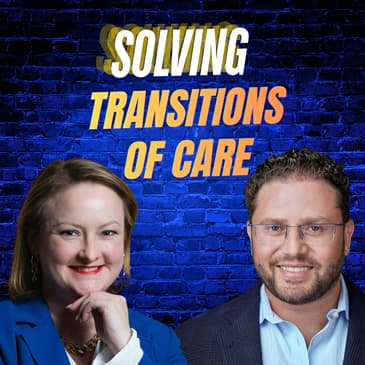
What if the number that matters most for an older patient isn't their age? Geriatrician Dr. Steven Buslovich, Chief Medical Officer for Senior Care at PointClickCare, joins host Rosa Hart, RN to talk about frailty, the messy handoff from hospital to post-acute care, and why ambient AI should be built for nurses and CNAs, not just physicians.
This episode is sponsored by PointClickCare.
Dr. Buslovich has spent his career on the receiving end of the hospital transfer packet. He shares how losing his mother and uncle within days of each other brought his grandparents into his daily life and led him to geriatrics. He explains how measuring frailty cut hospitalizations and lawsuits in the facilities he led, and how that work grew into Patient Pattern. He and Rosa also get into the quality-of-life conversations that often never happen before a procedure, and whether AI efficiency will protect clinician time or just add more patients to the load.
In this episode:
(00:16) Meet Dr. Steven Buslovich, geriatrician and CMO for Senior Care at PointClickCare (01:35) "Lazy people do everything twice" (03:11) Growing up with grandparents and becoming a geriatrician (06:00) What is frailty? Physiological age vs. chronological age (07:30) Data-driven conversations with families (08:37) The missing piece in U.S. healthcare (12:09) From problem to tech company: the start of Patient Pattern (12:35) Streamlining the "manila envelope" with digital referrals (17:00) A dedicated practitioner EHR for post-acute care (18:08) Ambient AI scribing for nurses and CNAs (20:30) The power of narrating care at the bedside (23:29) Protecting clinician time (26:13) The $1 billion question: a single source of truth for clinical data (28:55) Polypharmacy and medication reconciliation (29:10) Closing and how to connect
Connect:
Dr. Steven Buslovich: PointClickCare: https://pointclickcare.com
Learn more: PointClickCare
Facebook: https://www.facebook.com/PointClickCare
Instagram: https://www.instagram.com/lifeatpointclickcare/
X: https://x.com/PointClickCare
LinkedIn: https://ca.linkedin.com/company/pointclickcare
Like, subscribe, and comment with who should answer the next Billion-Dollar Question!
Connect with Rosa Hart
Get or Gift a copy of her book: “Speak Up, Start Now” on Audible or Kindle
Follow @NurseRosaSpeaks on your favorite social media platform
Subscribe for weekly conversations on AI in healthcare, hospital innovation, nursing leadership, and the future of health technology.
Available on Spotify, Apple Podcasts, YouTube, and all major podcast platforms.
[00:00:10] This episode was brought to you by PointClickCare. Hello and welcome to the Nurse Rosa's Insights podcast. I'm your host, Rosa Hart. This is a podcast where I get to talk to healthcare stakeholders about how they see we can make healthcare better overall. So when a patient leaves the hospital for a nursing home, their story is supposed to go with them. Too often what arrives is a thick envelope
[00:00:39] and a lot of guesswork. I have sent these envelopes out myself, so I know. My guest today has spent his career on the receiving end of that envelope and he decided to do something about it. So Dr. Steven Boslovich is a practicing geriatrician who still cares for older adults in nursing homes in post-acute care settings. He'll tell you he was born for this work. Early in his career, he got frustrated
[00:01:07] that the information he needed to really understand his patients wasn't in front of him. So he co-founded a company called Patient Pattern to fix that with a focus on people living with frailty and complex medical needs. That work brought him to PointClickCare, where he now serves as the Chief Medical Officer for Senior Care. So thank you so much for joining me today. Thank you, Nurse Rosa. Glad to be here.
[00:01:34] Yeah. So I do want to ask you before we get started, what do you mean by your mantra of lazy people do everything twice? You know, I've always been of the philosophy that, you know, if you take shortcuts, you end up redoing it a second time the proper way. You know, think about, oh, I'll do this later or, you know, I'll wait till I fill up the car and then you run out of gas and, you know, you end up doing it
[00:02:04] twice or maybe more than that. And so, you know, I always feel the need to minimize laziness or shortcuts and try to do right the first time because it'll be much more effective. And I have the same approach with patient care in the sense that sometimes I prioritize the most uncomfortable, lengthy conversation or family meeting regarding a difficult decision early on to avoid, you know,
[00:02:32] doing it 17 more times later when you could have just done that right the first time. Yeah. The first impressions make a big difference, don't they? And if you set an expectation and then have to change it, there can be a lot more resistance, right? When I first saw that, I was just like, well, I thought we want to work smarter, not harder, right? So thank you for clarifying that. Now, I think you've also said that you were a born geriatrician and I heard that that has something
[00:03:00] to do with your experience growing up close to your grandparents. So what did they teach you about older adults that medical school really didn't? Yeah. I've always wanted to become a physician as an early, you know, young adult. I grew up with the
[00:03:22] very close affinity with my grandparents, some of whom were physicians. And ultimately, I unfortunately had a tragic event in my family. I lost my mother and my uncle, her brother at a very young age, three days apart in my grandparents' apartment. And so my uncle, not my mother at the time. And so my grandparents ended up losing both of their children in less than a week. And so me and my family,
[00:03:51] we took my mom's parents into our lives much closer than most teenagers would. And ultimately, I grew up with an appreciation for their values and the values of older adults and how they differ from others and ultimately came to respect that. And I felt that if somebody lives to an older age, they've probably done something right in their life and they deserve the best possible care
[00:04:18] at the end of life where that really matters. And ultimately, you know, always knew I wanted to pursue geriatrics. And as I went through school and higher education, everything I've sort of experienced that confirmed that belief and interest. And ultimately, I love the complexity of older adults and geriatric patients in general. It's, you know, it's a relatively new field. It's only been around
[00:04:46] for a few decades. And there aren't enough of us out there to really meet the needs of the growing older population. And so I like the medical complexity, the nuanced geriatric syndromes are super interesting. And I think the attention to details really, really matter. And it's a longitudinal approach to patient care as opposed to transactional episodic approach. You know,
[00:05:14] if you're dealing with an urgent care kind of environment. And I really, you know, wanted to see that impact of my interventions or approach to the patient really, you know, over time where I could see what's working, what's not. And that ultimately made me a better clinician as well. Yeah. Well, I'm so sorry to hear about what happened with your family, but I love how, you know,
[00:05:40] you used your experience with such a deep relationship with your grandparents as kind of as parents, it sounds like, to really pay it forward to, you know, older people. And so tell me some more about frailty and what that means to you and your work around it. Yeah. You know, frailty, the way I think about it is ultimately it's a
[00:06:06] holistic approach to evaluating the individual. So think of it as somebody's physiological age rather than their chronological age, which is what their license depicts, right? And so when we look at an individual from the lens of their functional, cognitive and psychosocial domains, what we find is that individuals, particularly in my settings where I care for them, have accumulated
[00:06:36] deficits in those areas faster than the general population is expected to accumulate them. And that could be as a result of disease or lifestyle or, you know, stressors or trauma. And ultimately, you know, their physiological reserve, their fuel tank, isn't as full and it's harder for them to get over the hill with a, you know, with a shortage of gas
[00:07:01] in their tank. And so my approach is ultimately to assess that reserve, understand where they are in terms of their risk profile, which allows me to then set patient family expectations around, hey, next time you approach a hill, you may not be able to go over it, right? And here's why. And I think, you know, being able to have those conversations with data is incredibly powerful
[00:07:29] where families respond well to information that's actually presented in a comprehensive manner that's not focused on a lab result or a diagnosis that they may not understand, but rather, you know, mom or dad is having challenges with balance and memory loss and is experiencing depression or is having falls or maybe, you know, sleep disturbances and, you know, losing weight. They see those things and they can understand that. And, you know, we put them into the context of this is why
[00:08:00] mom is or dad is frail and ultimately, you know, convey that information in a way that we can show them perhaps we can address and reverse some of these deficits, but there's, there will come a point where, you know, you no longer can and it becomes irreversible. And then we set expectations of what's to come so they can make the most appropriate and patient-centric decisions around what level of
[00:08:25] interventions they would want to pursue based on their preferences and expectations as well. And I think we're missing that generally in the U.S. healthcare system today, you know, patients go to the hospital, they get a stent, the cardiologist said the stent's working fine, you're going to go to rehab and, you know, mom will be there for a few days and, you know, she'll be fine. But when mom comes to one of our rehab or
[00:08:51] nursing facilities, you know, the stent is working fine, but that stent belongs to somebody with functional cognitive and psychosocial impairments. And, you know, we know they're like five minutes away from hospice, let alone going home in five days. And so it becomes our job responsibility. And unfortunately, a burden to convey that type of information and level set expectations when, you know,
[00:09:16] it should have been communicated much earlier on in their treatment course. But in the U.S., we tend not to spend the time as a whole to assess patients for frailty and then convey that risk and set patient family expectations early. We're just not incentivized as a whole. And so geriatricians tend to do that. They do comprehensive assessments, they evaluate and, you know, address frailty
[00:09:45] typically. Most other specialists in primary care physicians don't have the time or skill set often to make those assessments or convey that information. I have seen the results of those conversations not being had so many times. So a lot of my clinical experience was eight years in a neuro ICU. And I've seen so many people getting procedures where, you know, their baseline functionality, like you were saying,
[00:10:13] their quality of life was already really low. But because they were not able to ever have those conversations with their loved ones, their loved ones want to do everything possible for them and don't want to, you know, deprive them of care. But they also may not even be aware of how functional they are. There's a lot of masking, especially like with memory and cognitive situations. And then, you know,
[00:10:41] they may have been just like barely on the verge of not being able to live independently. And this pushes them over the edge. And just talking about like, if this intervention is done and they get the stent, like you mentioned, like what quality of life is that going to provide them? Is that just going to give them like maybe a few more months if they're immobile from this and they're not able to participate in the
[00:11:06] rehabilitation to get stronger and back to their baseline? And I've definitely seen the difference that it makes in, you know, peace for the family to have those conversations earlier. They actually would bring me on as the nurse for patients when they were going to have those palliative care conversations to, you know, help support like the physician or the palliative care team and reinforce that with the
[00:11:32] family because there's so much like guilt around those conversations or they feel like they're being negative or bringing up things that shouldn't be talked about because it's like taboo kind of to talk about. But if you frame it, like you were saying, from a measurement perspective and from a quality of life perspective, instead of waiting until it's like, are we withdrawing care? Then it doesn't have
[00:12:01] to be so heavy, you know? So I really appreciate you making that a priority. Yeah. And I would just add that when I started as a medical director, I took over some very large inner city, three, 400 bed nursing homes, you know, they were hospital based and I was running many hospitals ultimately. And I had no data in my disposal as a medical director to understand,
[00:12:30] you know, frailty to understand where to pay attention and where my team should focus. And so I essentially realized what we're collecting typically in the U.S. market are diagnoses codes and labs, but that doesn't tell you if somebody can get out of bed independently or, you know, run a marathon. And we're missing that in our sort of data ecosystem. Mm-hmm. And so I started measuring that through existing data and comprehensive assessments and ultimately
[00:12:59] was able to really turn facilities around, reduce unnecessary hospitalizations, improve advanced care planning approaches early, at which point our, you know, calls to surveyors decrease, the ER send ads decrease unnecessarily, and lawsuits decrease as a result as well. So it was a win-win-win. And the patient family wins, the facility wins, and, you know, healthcare utilization improves as well. So I
[00:13:28] think this approach absolutely works. It's just we need to create the data elements to be able to do this as automatically as possible because we just don't have the time with the nursing crisis, the physician shortage, and such to measure these things manually. Yeah. So you're telling me you didn't just start out to build a tech company. You were just seeing a need and looking to solve for the problem that you were faced with.
[00:13:59] That's correct. I wanted to solve this problem for myself and eventually it evolved and we were able to help organizations, you know, take that take full capitator risk to understand their population better, care manage more effectively. And ultimately, again, if you do the right thing for the patient, the family, everything else falls into place.
[00:14:23] Yeah. So going back to the aforementioned thick folder that I started our conversation off with that, figuratively, I would have sent to you. So what are you working on at this point that can really make the difference in streamlining that communication so that these patients are getting better care? Yeah. Yeah. Yeah. I think I'm very excited because at PointClickCare, we are,
[00:14:50] you know, we're touching all of those different points of transition from acute hospital to post acute, for example, and vice versa. And one of the biggest challenges today to solve the Manoa envelope with multiple conflicting referral packets and medication lists, you know, we are extracting that digitally as
[00:15:15] part of the referral advisor product that ultimately automates the, and synthesize that information downstream. And what we find is that admission nurses and, you know, the medical team that reviews that information can make a much more accurate and informed decision rather than miss something that could
[00:15:39] have maybe changed a care plan and ultimately avoid a poor outcome. And so that data then automatically, you know, flows into the workflow. And so now, you know, if you typically admissions in my mind are the weakest link of the whole puzzle. That's where medication errors happen. That's where information is missed. And that's ultimately where patients and families can have a very negative first impression, right? So
[00:16:08] don't be lazy. Don't do it twice. Do right the first time. Apply it, automate it, synthesize it, and improve the care plan from the start so you don't lower the bed, you know, of the resident with fall risk after the fall. You do that proactively because you know they're already at risk, right? And you move them closer to the nursing station. You put them on your higher acuity unit to stabilize them maybe for the first week or so. You don't just put them on the fourth floor, you know, lockdown unit because
[00:16:38] there's an empty bed, not recognizing this is a high-risk individual. And ultimately that, you know, as that initial information feeds into the electronic health record, the tools available to the practitioner and the medical director is enhanced. And so we built a practitioner EHR dedicated to this practice. So those that are, those practitioners that are dedicated to post-acute long-term care
[00:17:06] settings. Ultimately, you know, they come into the facility. So, you know, they see the patients where they are and they interact with the data that the facility EHR has. And so we built a dedicated practitioner analogous product that ultimately is owned by the practice group, but that data is synced. So now the practice provider can see everything that's in the chart in a single screen experience.
[00:17:33] And ultimately their diagnoses and their care plans are now linked into the facility record. So we don't have 17 diabetes codes and conflicting care plans and waiting for faxes to come over to be scanned into the chart. Everything is really unified. And so order entry, you know, sharing of information, documentation, documentation improves. And once that improves, the AI tools that we're building for both sides,
[00:18:02] you know, have much more accurate and comprehensive data on that individual resident and patient. And so the AI integrity and the quality of those features and functionalities improves as well. And one of the most exciting things I think, you know, we're working right now is applying ambient scribing technology for nurses and frontline CNAs, for example, like nursing assistants,
[00:18:28] because most ambient tools out there are designed for the medical team. And we have that as well in our practitioner EHR, which is great and saves a lot of time. It's efficient. However, most of the people taking care of residents in the setting are nurses and nobody's, you know, focused on that population. And with the shortage of nurses, we really wanted to create a much more efficient
[00:18:55] work experience for them. So they're not spending all of their time in front of a keyboard, but rather at the bedside and, and have a conversation with the, with the resident, which ultimately imagine a world where you're walking into the room, you're having a dialogue with the patient, you're probably saying more than you normally would because you're trying to get your documentation done. But the patient has a better experience because they think you're explaining things to them, which you are
[00:19:24] ultimately, and that's the right thing to do. You walk out of the room and you know it's done, your assessment is done. And so you, you know, nurses can be nurses again. And we want to bring nurses back to the bedside. We want to bring practitioners and physicians back to the bedside and really away from, you know, spending time doing administrative tests and documenting and rather, you know, have the technology work for them, not the other way around.
[00:19:50] I'm so glad that you brought this part up because yes, narrating your care is so good for, you know, capturing it for the EHR if you're able to use ambient scribing. But it does have that effect on the patient to like, one, reassure them and let them know what's happening to them, which can also reduce liability, right? If they're not misunderstanding what you're doing to them and
[00:20:20] they understand there's a clinical reason for it and the intentionality behind it, like I'm doing this to help you because this is how it will benefit you. Then there's also educating the patient and or the family member on, you know, how to care for themselves so that when they are discharged, they can do a better job of it. They understand the rationale and the methodology. And thank you
[00:20:45] for prioritizing nurses. But I think one reason a lot of people don't understand the clinical value of our assessment and our interventions is because so much of it is done silently at the bedside because we're going through the pleasantries of conversation. And then we're like documenting all the time we're assessing mentally and, you know, clocking everything on them physically. But all that's being done in
[00:21:13] our head and it's otherwise invisible. Whereas if we have to verbalize it, I think that could also help, you know, the other clinicians as well as the patients recognize the clinical judgment and critical thinking that's being applied by the nurses in the facility as well. And so I'm really excited about
[00:21:36] this bringing people into learning how to narrate care because that's part of the art of nursing and the art of medicine that's not taught necessarily in textbooks or something you get checked off on in our clinical rotations, right? It's something that you learn from a preceptor or a mentor.
[00:22:00] And we have a lot less of those available to train the newer nurses. So I see all this working together that we're going to be able to do better to actually improve the quality of care, even if it takes ambient AI to get us to be more human. Dr. Justin Marchegiani Ironically, I believe that that is the case. And I probably don't have to bring about PTSD for you,
[00:22:23] but, you know, when I see nurses documenting after their shift ends for two hours to try to get their notes done, you know, to me that that's unfortunate and needs to change. And we, and the same thing for practitioners, like they're, they're, they're spending hours of pajama time and I just catching up with their documentation. If we can remove that and really, you know, minimize it. So when you're
[00:22:49] done with your shift, your documentation is done, the quality of the documentation, it has improved and it's more robust. I think that's a great legacy for, for point-click care to be able to leave in the market. I, I don't really understand why we keep overburdening, overburdening clinicians, right? With more and more and really, you know, they're leaving the practice. And I think it's,
[00:23:15] it's a detriment to the residents that, that need, that need the care. And I think there's really great clinicians out there that love the work. They just can't handle the, the after hours. Yeah. And I'd love to ask you more about this as far as, you know, if we develop these, well, but you are, you've developed these tools to reduce that pajama time or that time charting after the
[00:23:43] shift is over. But if we're giving time back to the clinicians, I haven't heard many ideas put forward of how do we protect the clinician's time from just getting overburdened with more patients by like say administrations thinking, oh, well it takes you less time. So here's twice as many patients because you can do it in half the time now. Yeah. Yeah. I mean, that's a fair point. I think
[00:24:10] there's probably a balance there, but the reality is there's always work to do. And if I can leave on time and see 30% more patients, I feel, and it's easier to do that. Like I could just be a clinician, not worry about having to do 30% more documentation, for example. I think most clinicians would be happy to
[00:24:34] actually treat patients and manage the care. I think if you want to, you know, chase the documentation related to that. So yeah, you know, there's, there's, there's probably going to be some, potential, uh, we'll say trade-offs with, you know, the free time. But right now, you know, we're dealing with so much burnout and so many people leaving the field that I think, you know,
[00:24:58] if we just use it as a retention tool, I think, you know, that would be worth it in itself because hiring a new nurse or hiring a new physician, for example, is incredibly difficult and expensive for any organization. And that turnover is not good for anybody. And so I think there's real value in, in helping with, you know, reducing burnout, improving retention in itself, aside from maybe,
[00:25:25] you know, increasing your, your, your roster or, or patient load. But today the, the, the patient load that nurses have to deal with is, is unbelievable. Yes. It's unbelievable. So I don't think they can see more. I just think they'll probably end up doing a better job, see the ones they have to see. Right. Well, I am definitely on team. Let's not give them more, but, but you're right. The need
[00:25:52] never stops. So this brings me to the billion dollar question that I ask every guest on the nurse Rosa's insights podcast, which is Steve, if you were given a grant for $1 billion to meet a need you see in healthcare, how would you like to see it used strategically to have the most sustainable impact? Well, I think the biggest problem I'd like to solve will require a lot more than a billion
[00:26:18] dollars. That's okay. But as a starting point, I think, you know, one of the biggest challenges we have is the, the, the data, the clinical data today doesn't follow a patient across the care continuum. And so nurse Rosa's data that was collected in the hospital setting doesn't translate
[00:26:43] back to the community in the ambulatory setting or to their post-acute, you know, the care EHR, for example. And so what I would want to try to accomplish is establish a longitudinal single source of truth so that data is accurate and consistent throughout, you know, transitions in
[00:27:06] the ecosystem. And if we look at us, you know, a really acute problem to solve, I would say medications would be my, you know, initial target for that $1 billion amount. I would say every time there's a transition, there's an incredibly high prevalence of medication errors happening. Yeah. Particularly when nurse Rosa gives me the manila envelope. And I think... Stop blaming me now. I'm not doing that anymore. You're the messenger. You're the messenger.
[00:27:35] And I think if we could just solve that data problem where somebody's medications can be ported over from their ambulatory setting to the hospital, to the rehab facility accurately, I think we would make such an important impact for patient outcomes across the entire ecosystem and save CMS and insurers a ton of money as well. Because often we are over-prescribing
[00:28:05] because we just don't have the right information available to us. And there's just a lot of waste and ultimately it has a negative impact for patient outcomes, including readmission. So, you know, let's get rid of the brown bag requirement for, you know, patient or caregiver to bring in their home meds so that we actually see what they're taking. We should be able to build a reliable single source of truth across the ecosystem in a digital fashion. And I think that's where I would really
[00:28:33] focus our resources. Well, I agree. Polypharmacy is such a problem, let alone just missing medications, right? And then they don't get refilled. So on both ends, too much or too little, we need all just the correct information, please. So we can just have continuity of care. So I am definitely on that journey with you. So thank you for the work that you are doing to get us a step closer. And, you know, may you find a billion
[00:29:02] dollars to do that with. Thank you so much. I hope so. Yeah. I'll be looking forward to further conversations. Thank you. Definitely. So if someone heard this conversation and they want to talk to you more about it, is LinkedIn the best way to connect with you? Yeah. I'm fairly active on LinkedIn. Please visit PointClickCare, reach out if you have any questions or would like to learn more about anything we mentioned today. And yeah, thank you for having me. Yeah, it was my pleasure.
[00:29:30] For our listeners, if you enjoyed this episode of the Nurse Rosa's Insights podcast, you can like and subscribe wherever you're listening. Or if you're watching on YouTube, please leave me a comment. If you have the solution to the problems we have discussed, please share. Let's get them out there in the universe so we can make them happen. And point me in the direction of the healthcare stakeholders with even more ideas. You can find
[00:29:57] me on social media on all the different platforms at Nurse Rosa Speaks, and I'll see you in the next episode.